

An Organization Built for Scale, Under Pressure to Do More
Action Against Hunger operates at a scale that few non-governmental organizations reach. In 2024, the organization delivered $160.7 million in total program activity across 57 countries, supported by 8,500 staff members and a network of eight affiliated NGOs spanning Paris, Madrid, London, Toronto, Berlin, Rome, New Delhi, and New York. Its programs reached 26.5 million people across nutrition, food security, water and sanitation, health, and disaster preparedness. Program services consumed $136.8 million of total expenditure in 2024, representing 85.5 cents of every dollar spent. For 17 consecutive years, Action Against Hunger has held Charity Navigator's highest 4-star rating.
The numbers reflect an organization that has earned its credibility through operational discipline and geographic reach. Somalia, Ethiopia, and South Sudan together accounted for $102.7 million in program expenditure in 2024, with Kenya, Uganda, Haiti, Tanzania, and Zambia comprising the remainder. Funding comes from U.S. Government grants ($40.8 million in 2024), non-U.S. Government and multilateral sources ($82.8 million), and private contributions and events ($16.6 million). That funding base, and the geopolitical conditions that shape it, grew more uncertain in early 2025 when Action Against Hunger received a stop-work order affecting its U.S. Government-funded programs, following a federal executive order pausing foreign development assistance.
The implication was direct. An organization doing humanitarian work at this scale, in this funding environment, needs to operate with maximum efficiency. Every dollar that does not reach a field program is a dollar that does not reach a person in need. That calculus makes technology and data infrastructure strategic priorities, and it makes AI governance at the board level a question of mission effectiveness.
Why an AI-Native Board Member, and Why Now
Action Against Hunger's board governs an organization that sits at the intersection of humanitarian operations and complex data challenges. Field programs in Somalia, South Sudan, and Ethiopia generate logistics, health, nutrition, and supply chain data across environments with unreliable connectivity, rapidly shifting security conditions, and compressed operational timelines. The ability to analyze that data in near-real time, to route resources efficiently, to anticipate supply shortfalls, and to model the impact of funding disruptions is no longer a capability enhancement. It is a core operational requirement.
The broader humanitarian sector is reaching the same conclusion. AI tools applied to food security forecasting, malnutrition detection, and crisis early warning have demonstrated material impact in field settings. The World Food Programme's statistical sourcing tool SCOUT, which uses AI-driven procurement and delivery planning, saved $2 million in a single year in West Africa. At the scale Action Against Hunger operates, comparable gains in logistics optimization, field resource allocation, and data-driven program targeting represent significant amplification of mission impact.
To govern an organization building these capabilities, Action Against Hunger needed a board member who understands AI from the inside: how platforms are architected, how value is extracted from data at scale, how governance structures enable responsible deployment, and how organizations build the internal capability to sustain AI investment across operating environments that resist standardization. That profile sits at a specific intersection of technical fluency, investment discipline, and operational experience.
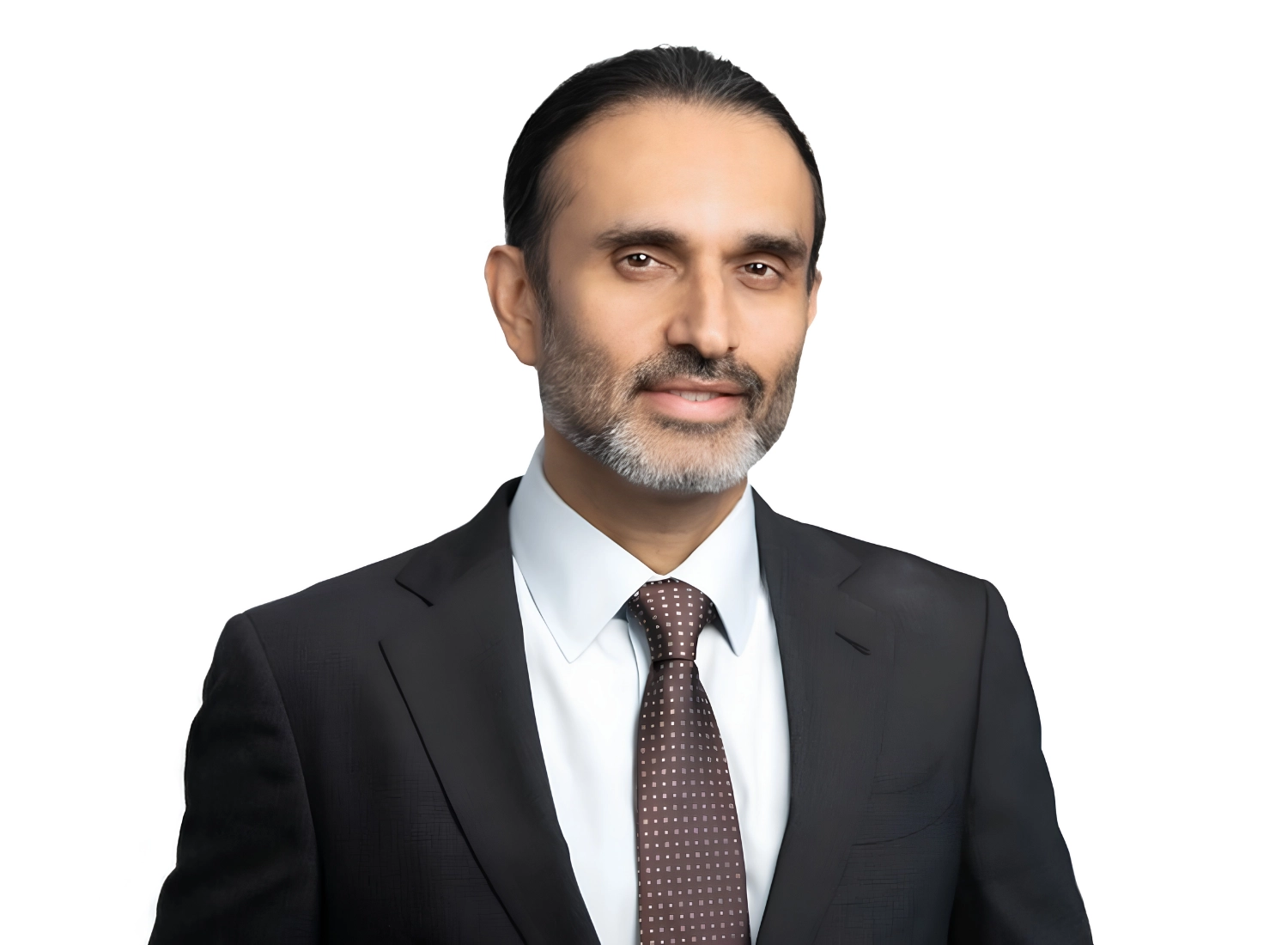
Christian & Timbers identified and placed Ashish Chandarana as a member of Action Against Hunger's Board of Directors.
Ashish Chandarana: A Career at the Intersection of Capital, Technology, and Operational Transformation
Ashish Chandarana is a Partner and Head of Portfolio Optimization at Veritas Capital, one of the most technically sophisticated private equity firms in the United States. Veritas manages over $54 billion in assets under management, with a mandate centered on mission-critical technology businesses serving government and commercial customers across defense, healthcare, national security, and regulated industries. In February 2026, Veritas closed $15.3 billion for its Fund IX strategy, one of the largest fundraises in the firm's history, with AI explicitly identified as a core secular growth driver across the portfolio.
As Head of Portfolio Optimization, Ashish leads the function responsible for driving measurable operational improvement across Veritas's portfolio companies. That mandate is inherently a technology mandate. Veritas's Portfolio Operations team embeds AI and data analytics directly into its value creation methodology, working alongside portfolio company leadership to identify optimization opportunities, build data infrastructure, and deploy tools that generate compounding returns on operational efficiency. This is AI not as a theoretical investment thesis, but as a hands-on value creation discipline, applied under the conditions that private equity demands: defined timelines, measurable outcomes, accountability at every level.
The context matters. Veritas's portfolio companies operate in sectors where AI deployment carries real consequence: defense systems, healthcare supply chains, national security technology. In November 2025, Veritas acquired MetroStar, an AI-enabled digital transformation services provider that has spent nearly three decades delivering mission-critical AI solutions to the U.S. Department of Defense and the Intelligence Community. The acquisition was framed explicitly as advancing AI in national security, and it reflects the seriousness with which Veritas approaches AI as a platform for operational transformation in high-stakes environments.
Ashish came to Veritas with a career built across three demanding institutions. As a Partner at McKinsey and Company, he focused on accelerating operational performance and organizational effectiveness at companies in energy, hi-tech, pharma, and industrial sectors. His work at McKinsey developed the analytical rigor and cross-sector fluency that complex portfolio optimization requires: understanding the structural levers that drive performance in one industry, recognizing their analogues in another, and designing interventions that produce durable results. Prior to McKinsey, he spent time as an Investment Principal at Aureos Capital, an emerging markets-focused private equity fund, developing firsthand experience in the operational realities of organizations working across geographically dispersed, resource-constrained environments.
That last point is worth pausing on. Aureos Capital invested across Africa, Asia, and Latin America. Ashish's experience evaluating and supporting businesses in emerging markets is not incidental background. It is directly relevant to the environments where Action Against Hunger operates. An investor who has worked across East Africa and South Asia understands the infrastructure constraints, the data limitations, and the organizational dynamics that make AI deployment in those contexts fundamentally different from enterprise technology rollout in a New York office.
His educational foundation reflects the same breadth. Ashish holds a dual B.A. in Economics and International Relations from Brown University, an M.Phil in Economics from the University of Cambridge, and an M.B.A. with Honors from the University of Chicago Booth School of Business. He is also a Chartered Financial Analyst. The combination of economic analysis, international policy literacy, and investment discipline is unusual, and it is well-suited to a board role that requires holding both the AI governance dimension and the global operational context simultaneously.
What This Appointment Means for Action Against Hunger
Board governance in the humanitarian sector has traditionally been organized around fundraising capacity, legal expertise, financial oversight, and subject matter knowledge in public health or food security. The addition of a partner-level AI and operational technology practitioner represents a deliberate evolution in how Action Against Hunger approaches strategic oversight.
The timing reflects the operational stakes. Action Against Hunger is managing a funding environment that demands greater efficiency from every program dollar, in a humanitarian landscape where AI tools are generating measurable impact for organizations that have invested in the capability. Having a board member who has spent his career deploying AI-driven optimization across complex organizations means the organization's leadership team has direct access to that experience at the governance level: in strategy sessions, in capital allocation decisions, in discussions about technology infrastructure, and in the framing of how data and AI capabilities are built and governed over time.
For an organization of Action Against Hunger's scale and mission seriousness, that access is a material advantage.
A Placement That Reflects the Moment
Christian & Timbers is proud to have supported this search and to have placed a leader of Ashish's caliber on the Action Against Hunger board. Board governance in the AI era demands a new kind of director: someone with genuine technical depth, operational credibility, and the governance experience to translate AI capability into institutional accountability.
With over 2,000 CEO and board placements for global corporations and more than 5,000 C-suite assignments completed across the technology sector, Christian & Timbers has the network and the process to identify that profile at the standard the moment requires.
Congratulations to Ashish Chandarana and the Action Against Hunger leadership team on this appointment.