

By early 2026, Chart Industries had built a $4.3 billion business in cryogenic and compression equipment, serving customers in more than 50 countries. The 2023 Howden acquisition had widened the portfolio into air and gas handling, compressors and a far larger aftermarket base. Backlog climbed to a record $6.28 billion. Europe carried much of the engineering and manufacturing weight, anchored by Chart Ferox in Děčín and Howden operations spanning 35 countries.
Two events then landed at once. Baker Hughes agreed to acquire Chart for $210 per share, roughly $13.6 billion in enterprise value. And CEO Jill Evanko announced her departure.
The Leadership Gap at the Hardest Possible Moment
Evanko stepped down effective January 6, 2026. The board appointed CHRO Gerry Vinci as President and stated no intention to name an interim CEO. Brussels had yet to rule. Closing sat months out.
European industrial customers underwrite long-cycle equipment on delivery cadence, uptime records and service continuity. Liquefaction trains, hydrogen compression, biogas and carbon capture projects run on multi-year commitments. A leadership vacuum in the region would show up first in order timing and second in customer confidence, at the exact moment the company needed both intact for the transaction.
Filling a regional president seat during a pending sale is where most searches stall. Senior operators read the situation quickly: unclear reporting lines, unclear post-close survival, no guarantee the mandate outlives integration. Chart needed someone who had lived through the same conditions and treated them as familiar territory.
A Search Built Around Integration Experience
Christian & Timbers was retained to identify a President Europe against a precise profile: large-scale industrial P&L ownership across European markets, a record of building aftermarket and service platforms, and documented experience carrying a business through post-merger integration and customer-trust recovery.
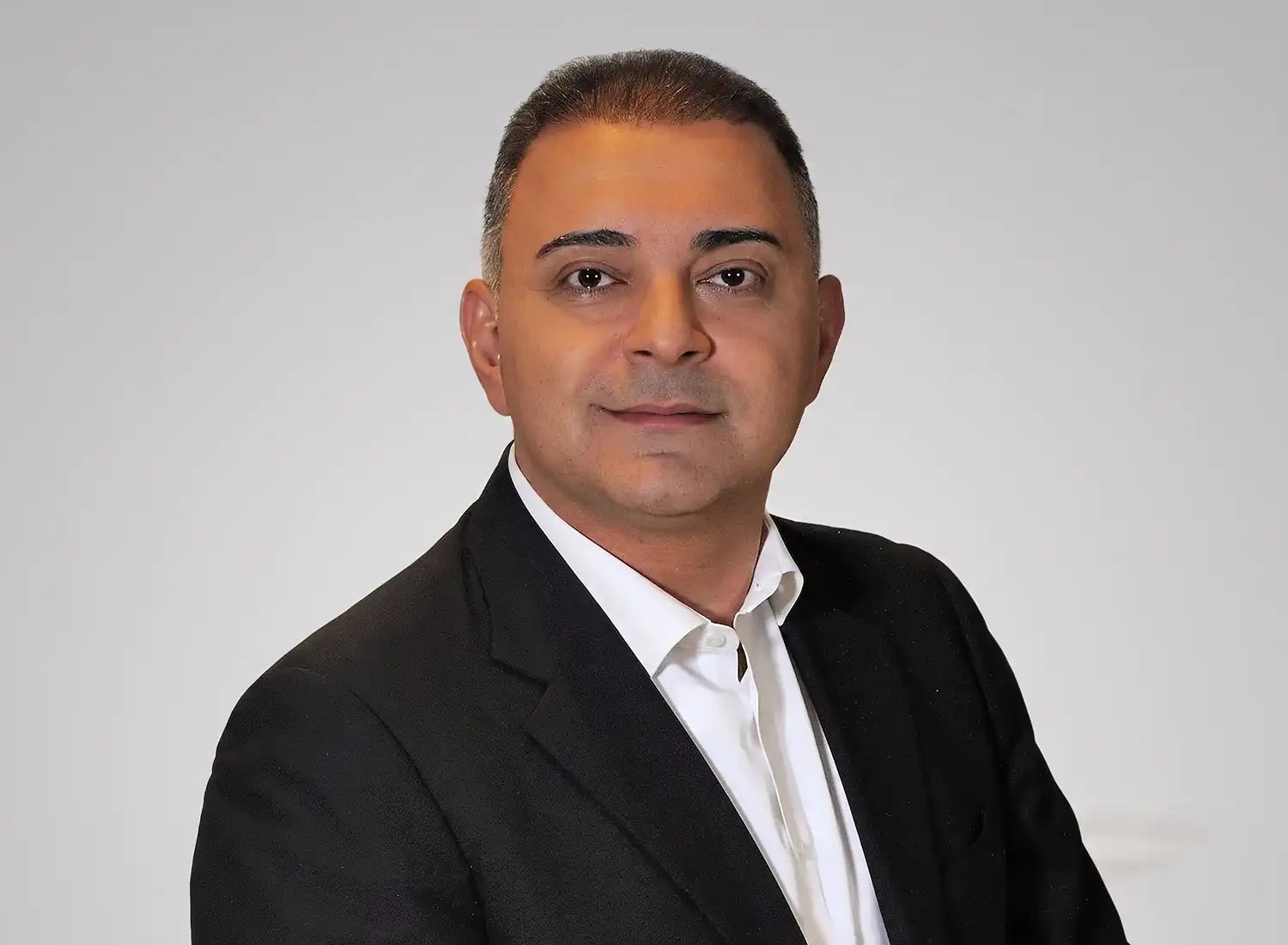
In February 2026, Arja Talakar was appointed President Europe at Chart Industries.
Talakar spent 23 years at Siemens. He started in 1996 as a rotating equipment and automation systems engineer and held roles across the United States, Germany, South Korea and Saudi Arabia. He led Siemens Saudi Arabia, building partnerships with global oil, gas and petrochemicals companies and securing large infrastructure projects. In April 2019 he became CEO of Siemens Oil & Gas, based in Houston. He went on to serve as CEO of Dresser-Rand and Senior Vice President of Industrial Applications at Siemens Energy, where he and his teams delivered a full integration and repositioned the business toward the energy transition. His final Siemens assignment addressed platform challenges at Siemens Gamesa, restoring customer confidence and rebuilding long-term value at scale. He holds an engineering degree from Technische Universität Braunschweig and an MBA from IMD Business School.
Three Capabilities Matched to the Mandate
Talakar's record lined up against the three pressures facing Chart Europe.
Aftermarket and service density. He built global aftermarket services businesses for power generation and industrial applications across Asia-Pacific, Africa and the Middle East. Chart entered 2026 with 703 new customers added during 2025, Uptime asset connections up 29% and service agreements up 21% year over year. Service economics carry the margin quality behind the Howden thesis, where aftermarket represents over 30% of pro forma revenue at roughly 42% gross margin.
Post-merger integration. Dresser-Rand gave him a complete integration and repositioning cycle inside a large industrial portfolio. Chart Europe sat on an unfinished Chart and Howden integration with a second, larger integration approaching.
Customer confidence under scrutiny. The Siemens Gamesa assignment centered on delivery credibility after platform failures. European buyers of engineered infrastructure apply the same test to Chart: reliability metrics first, commercial terms second.
Continuity Held Through the Close
- November 2025: Chart announces the CEO departure with the Baker Hughes transaction pending
- January 6, 2026: Gerry Vinci appointed President; the board confirms no interim CEO
- February 2026: Arja Talakar appointed President Europe
- May 11, 2026: Q1 results show backlog at a record $6.28 billion, with European Cryo Tank orders among the strongest categories
- July 10, 2026: The European Commission clears the transaction with conditions, including divestiture of Chart's IPSMR and small-scale LNG process technology and ten-year interoperability commitments
- July 16, 2026: Baker Hughes completes the acquisition; Chart becomes a third operating segment with a $325 million cost synergy target across three years
- August 2026: Talakar continues as President Europe
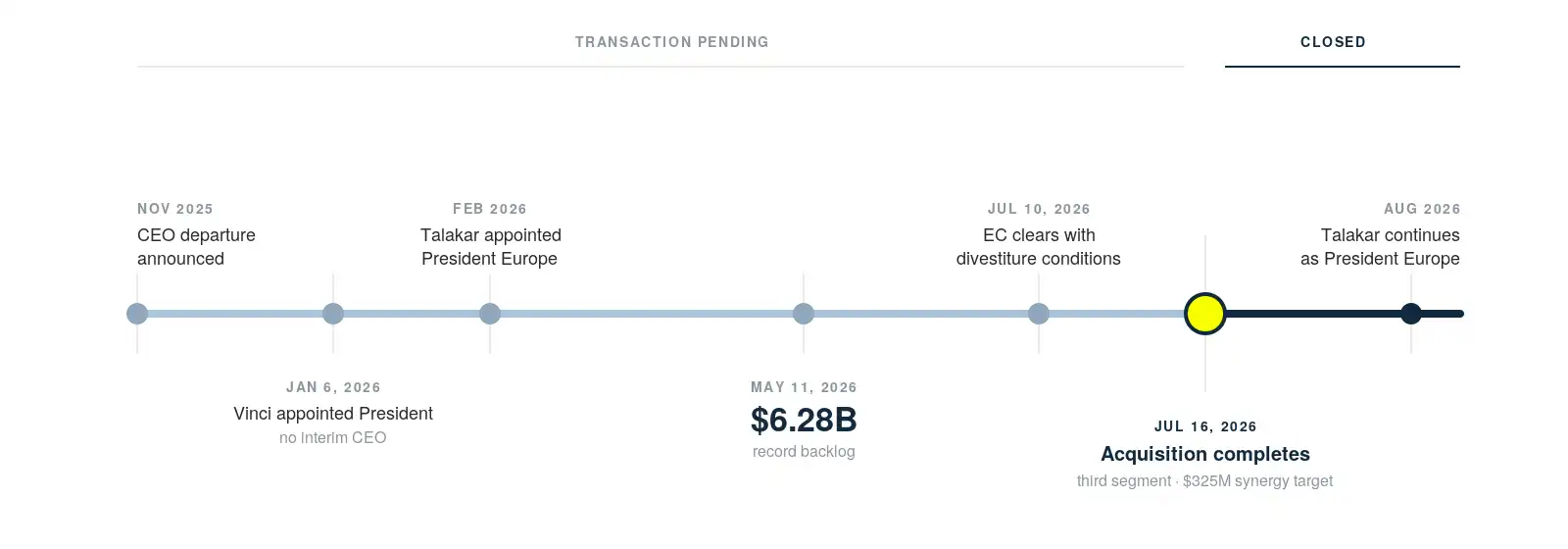
The detail worth reading twice sits in the last two lines. Chart's board and most executive officers ceased their roles at the effective time of the merger. The European presidency held. A regional operating seat filled five months before a $13.6 billion close survived the structural reset around it, which is the outcome the search was designed to produce.
Hiring Ahead of a Transaction
Most executive search runs on a stable org chart. Chart Europe offered the opposite: a departing CEO, an open regulatory file, an acquirer with a declared synergy target and a European P&L expected to keep shipping through all of it.
With over 2,000 CEO and board placements for global corporations and 5,000+ C-suite assignments completed, Christian & Timbers built the specification around the transaction rather than around it. The firm's AI-powered, science-based search process assessed candidates on integration outcomes, service platform economics and customer retention through ownership change, then matched Chart with an operator whose Siemens record covered all three.
Chart now operates inside Baker Hughes as a standalone reporting segment across air and gas handling, thermal management and lifecycle services, positioned against gas infrastructure, data centers, nuclear, carbon capture and geothermal demand. Europe entered that structure with leadership already in place, already briefed and already accountable for the region.