

Apple looked at where AI is heading and chose a hardware engineer as CEO. That choice shows where the next competitive battle will be won.
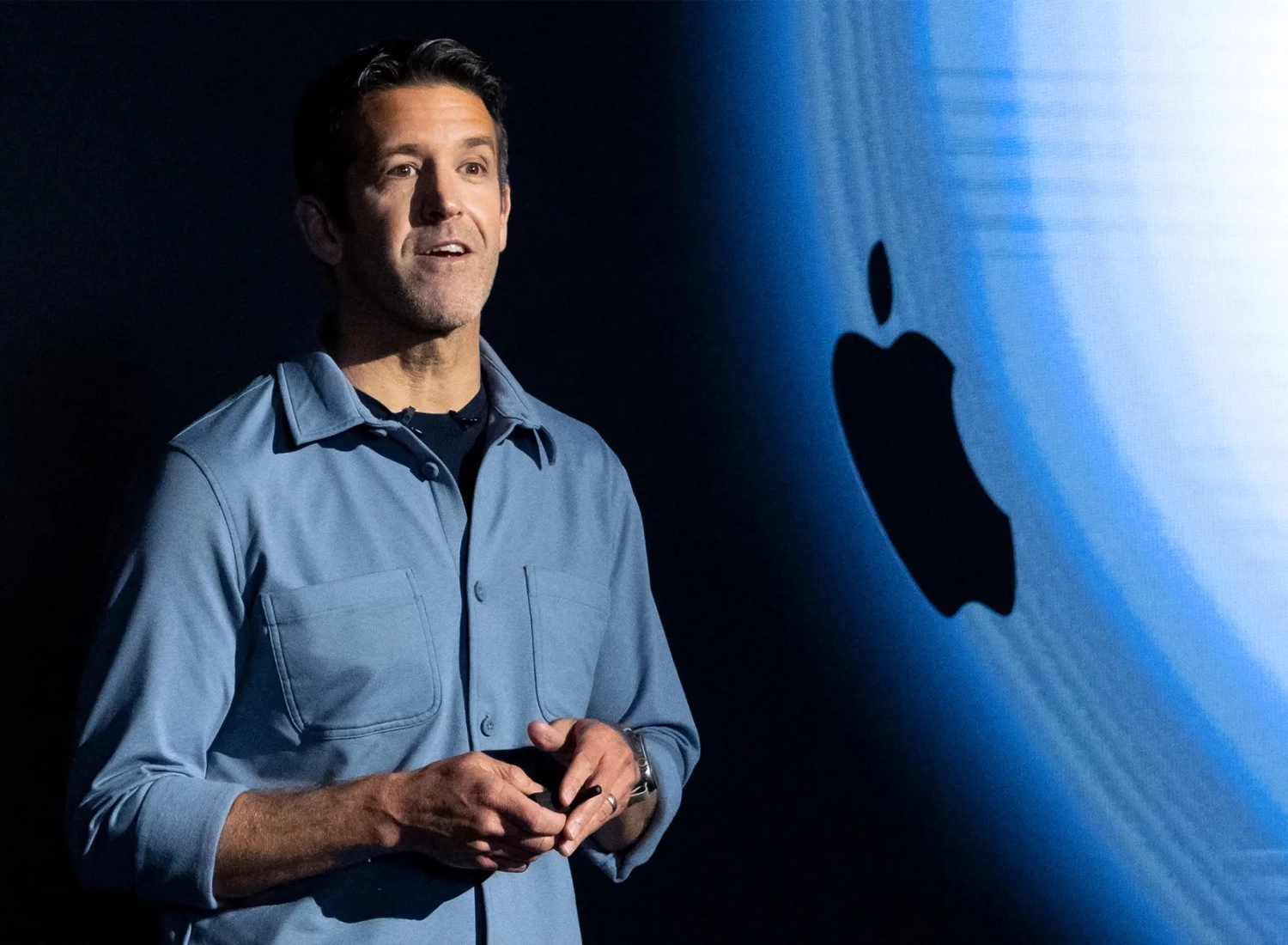
On April 20, Apple announced that John Ternus will succeed Tim Cook as CEO, with Cook moving into the role of Executive Chairman on September 1.
Most people expected the likely successor to look more like a traditional operator, someone shaped by finance and large-scale execution in the style of Tim Cook. Instead, attention keeps returning to the engineer who spent more than two decades building the products people use every day.
Ternus joined Apple in 2001 on the product design team and steadily moved into the center of the company's product decisions. He became vice president of hardware engineering in 2013 and joined Apple's executive team in 2021 as senior vice president of hardware engineering. Over that time, he played a major role in the shift from Intel processors to Apple Silicon, one of the most consequential strategic moves Apple made in the last decade.
His fingerprints are on the iPhone, iPad, AirPods, and Vision Pro, products tied directly to how Apple grows and how it protects its position.
Cook's leadership created one of the most disciplined operating businesses in the world. Supply chain execution became a competitive advantage. Services revenue became a major growth engine. Investors could rely on consistency at a scale very few companies can match.
Over the last few years, Apple has been unusually quiet on AI. This appointment is Apple saying the next phase of competition runs through hardware.
Most AI conversations still revolve around software. The focus stays on large language models and the companies building around them. The assumption is often that the future belongs to whoever leads that layer.
A software-first AI strategy struggles when intelligence moves into the device itself, where hardware decisions shape performance. Apple has never competed that way. Its advantage comes from controlling the full product and removing dependence on someone else's roadmap.
AI is pushing competition in the same direction. More intelligence now happens on-device, where performance depends on how the product works in the real world. A CEO who cannot think at that level will be making decisions without enough visibility.
The Apple Silicon transition shows this clearly. Moving away from Intel gave Apple independence from another company's roadmap and more control over product timing. That shortened the distance between what Apple could imagine and what it could ship.
The same shift is happening with AI. Companies that own the hardware will make decisions faster and ship faster.
What boards are looking for in the AI era
Last week on Bloomberg TV, I spoke about how boards are rethinking CEO succession in the AI era. One issue kept coming up: leaders who cannot explain how AI changes revenue are losing ground fast.
The question comes up in nearly every executive search conversation now: where does AI create measurable business impact?
Boards are done with general answers. Tenure and P&L history will not be enough in that conversation if leadership cannot explain how AI changes the business.
Across enterprise software and industrial businesses, that pressure is already deciding who stays in succession conversations and who falls out of them.
For some companies, that means hiring a founder-profile CEO. Others promote the executive who already shaped the product.
In board search work, I have seen one pattern repeat. When companies face a real strategic shift, operators keep the machine running, but engineers often decide where it goes next.
Ternus fits the profile boards are looking for now. He spent 25 years helping shape the decisions that built Apple's position in on-device AI and intelligent hardware.
Apple's leadership history shows how much weight Steve Jobs placed on product judgment during major strategic decisions. Execution and operations mattered, but at inflection points, product judgment carried more weight.
Apple under Tim Cook needed precision at scale. Ternus built the chips that made that scale possible. The next decade runs through the product itself.