


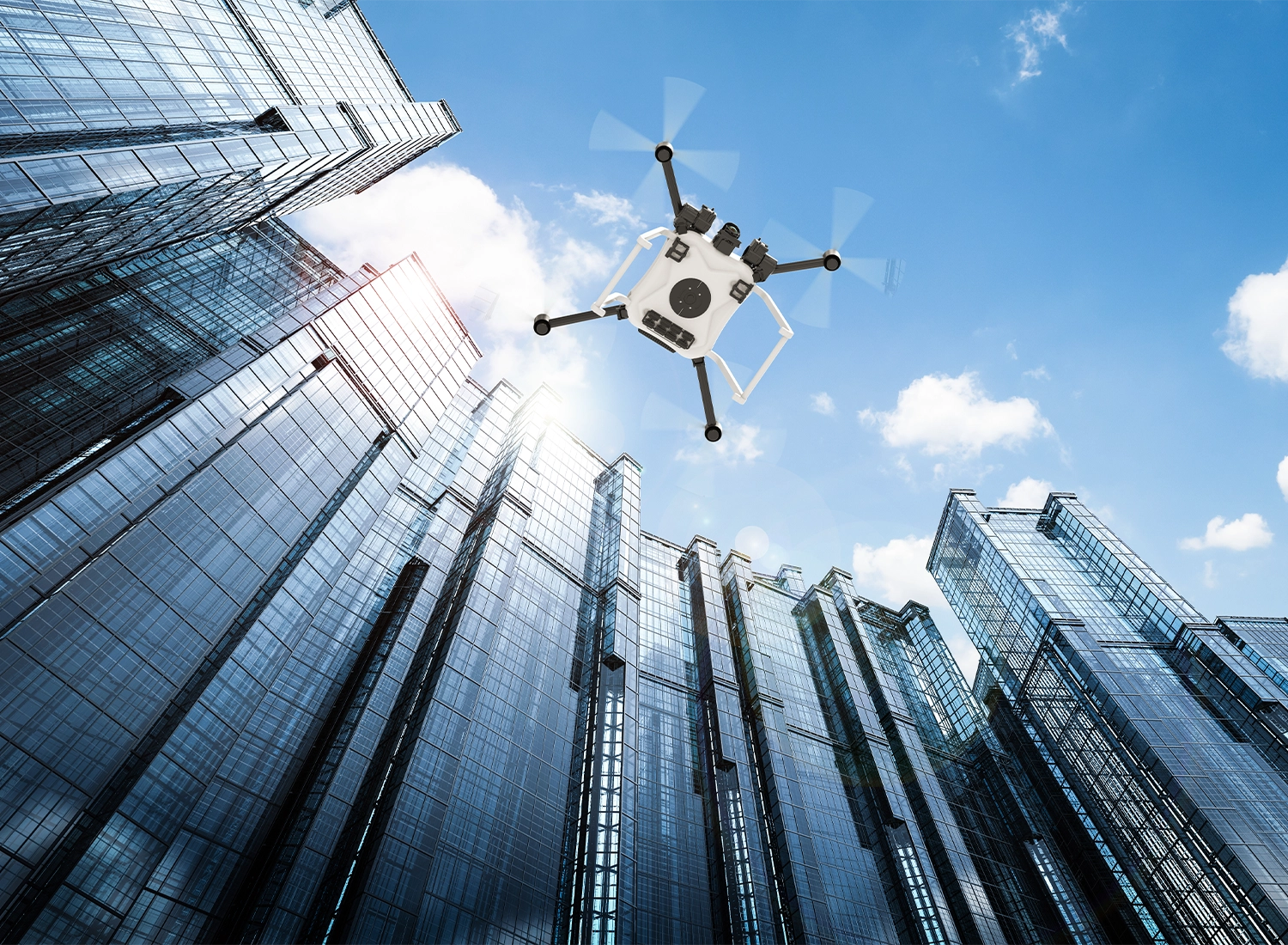
The US drone industry is entering its most consequential hiring period. Regulatory frameworks that held back commercial BVLOS (Beyond Visual Line of Sight) operations for years are now advancing. Delivery networks, infrastructure inspection programs, precision agriculture deployments, and defense contractor programs are scaling simultaneously. And the workforce capable of building, operating, and governing these systems has not grown at the same pace.
For hiring managers, HR leaders, and technology executives at US drone companies, 2026 is a year that requires a different approach to talent acquisition. The skills in demand are specific, the candidate pool is constrained, and the competition for qualified professionals is coming from multiple directions at once. This guide covers what is driving demand, where the shortfalls are, and how leading drone companies are winning the talent competition.
Drone Industry Outlook for 2026
The commercial drone market is one of the fastest-growing technology sectors in the United States. ABI Research projected the global commercial drone market to reach $58 billion by 2026, with the US accounting for the largest regional share driven by defense, logistics, infrastructure inspection, and agricultural applications.
Several regulatory and policy developments are reshaping hiring requirements directly.
FAA BVLOS rulemaking is advancing. The FAA's long-anticipated Beyond Visual Line of Sight operations rules, which allow drones to fly beyond the operator's direct line of sight without a waiver, are moving from pilot programs toward broader authorization. As BVLOS becomes operationally viable at scale, the demand for professionals who can design, certify, and operate these systems is growing faster than the talent pipeline can supply them.
The FAA Remote ID requirement, which mandates that drones broadcast identification and location data, has driven hiring for compliance and systems integration roles as operators and manufacturers work to bring their fleets into conformance.
Defense drone investment is expanding. The DoD's increased investment in autonomous aerial systems, counter-drone technology, and ISR (Intelligence, Surveillance, and Reconnaissance) platforms is generating defense-adjacent drone hiring that competes directly with commercial sector demand for the same technical profiles.
Urban Air Mobility (UAM) programs, including electric vertical takeoff and landing (eVTOL) vehicles, are transitioning from development to early commercial certification, creating new executive and engineering leadership demand at emerging aerospace firms.
In-Demand Skills and Roles in the Drone Sector
The drone talent market in 2026 is concentrated in six role categories where demand is consistently outpacing supply.
UAV Systems Engineers design and integrate drone hardware, firmware, and communication systems. The combination of embedded systems engineering, aerospace hardware knowledge, and familiarity with drone-specific communication protocols makes this one of the hardest profiles to source through generalist channels. Defense program experience with clearances commands a significant premium.
BVLOS Operations Specialists are professionals who design, certify, and manage drone operations that fly beyond the operator's visual range. This is a new and rapidly growing role category created by regulatory advancement. Candidates with FAA waiver experience and operational BVLOS program backgrounds are extremely scarce.
Drone Software Developers build the autonomy stacks, flight planning systems, ground control software, and mission management platforms that commercial and defense drone programs depend on. Proficiency in ROS (Robot Operating System), computer vision, and embedded C++ are the most requested technical credentials. Python and AI/ML skills for autonomous decision-making are increasingly required at senior levels.
Aerial Data Analysts and Geospatial Specialists process and interpret the imagery, LiDAR (Light Detection and Ranging), and sensor data that drones collect for infrastructure inspection, agricultural analysis, and surveying applications. Proficiency in GIS (Geographic Information Systems) platforms and photogrammetry software such as Pix4D and Agisoft Metashape is standard at the entry level. Senior roles require expertise in custom data pipeline development and multi-sensor fusion.
Regulatory and Compliance Experts navigate FAA Part 107 certification requirements, BVLOS waiver applications, airspace authorizations, and the emerging international regulatory landscape for cross-border operations. As the regulatory environment becomes more complex, in-house regulatory expertise is becoming a competitive necessity rather than a consulting outsource.
Drone Program Managers and Business Development Leaders with both technical credibility and commercial experience are among the scarcest senior profiles in the sector. The ability to manage FAA certification timelines, customer expectations, and cross-functional engineering teams simultaneously is a combination that very few candidates bring.
Hiring Challenges and Talent Shortages
The drone sector's talent challenges in 2026 are structural, not cyclical. They will not resolve as the market matures. They will intensify as the market expands.
The candidate pool for specialized drone roles is thin. Drone engineering as a distinct discipline is relatively new. The universities producing graduates with drone-specific skills are a small subset of aerospace and robotics programs. Most drone engineers are self-taught, career-changers from adjacent aerospace or robotics fields, or former military operators who transitioned into commercial roles. None of these pipelines produces volume.
Competition is multidirectional. Drone companies are not only competing against each other for technical talent. They are competing against aerospace primes, defense contractors, autonomous vehicle companies, and robotics firms for engineers with overlapping skill profiles. A strong embedded systems engineer or computer vision developer has options across all of these sectors, and the highest bidder is not always a drone company.
Geographic concentration creates a local talent crunch. Drone industry activity is concentrated in a small number of US markets: San Diego, the Reno-Carson City corridor, Phoenix, Dallas, and Northern Virginia. Companies in these markets compete for the same local talent pool. Remote work has partially addressed this for software roles but has limited application for hardware and operations positions where physical access to aircraft and test facilities is required.
Clearance requirements add a layer of scarcity for defense-adjacent roles. Drone companies working on defense programs require engineers and operators with active security clearances. This constraint reduces the already-limited candidate pool further and extends hiring timelines for affected roles.
Successful Recruitment Strategies for Drone Companies
The drone companies closing hard-to-fill roles in 2026 share several practices that distinguish them from organizations relying on general-purpose recruiting approaches.
They engage specialist recruiters with genuine sector relationships. Posting a UAV systems engineer role on a general job board produces applications from candidates whose credentials only loosely match the requirement. Specialist drone recruiters maintain ongoing relationships with passive candidates: engineers who are currently employed, performing well, and selectively interested in the right opportunity. The difference in shortlist quality is significant.
They define roles around problems, not credentials. Job descriptions built around a list of tools and certifications attract candidates who match the list. Descriptions that explain the specific technical and operational challenge the incoming hire will solve attract candidates who are motivated by the problem rather than the credential match. Drone companies that write the second kind of description fill roles faster and with better retention outcomes.
They move faster than the market. The best drone candidates are fielding multiple approaches simultaneously. Companies that require six interview rounds over three months lose candidates to faster-moving competitors with shorter assessment processes. A streamlined, respectful interview process is a recruiting asset in a tight market.
Christian & Timbers brings a specific advantage to drone sector talent acquisition. The firm's approach to drone and unmanned systems recruiting is built on the same retained, relationship-based model that drives its defense and technology executive search practice. Candidate relationships in the UAV and autonomous systems community are maintained continuously rather than assembled reactively when a search opens. The firm understands the technical distinctions that determine whether a candidate is genuinely qualified for a drone-specific role, not just adjacent. And its US market focus means its compensation benchmarking and candidate expectations are calibrated for the specific dynamics of the American drone sector.
For roles that sit at the intersection of technical expertise and leadership, including heads of engineering, VP of flight operations, and chief systems architect positions, the retained search model Christian & Timbers operates ensures focused attention and quality accountability throughout the search.
How to Attract and Retain Top Drone Talent
Securing a hire is only the first challenge. Retaining drone talent in a market where top professionals receive continuous outreach requires deliberate employer strategy.
Compensation must reflect market reality. Drone engineering compensation has increased significantly in the past three years as competition from adjacent sectors intensified. UAV systems engineers at senior levels command salaries comparable to aerospace and defense peers, with equity components that have become standard at venture-backed drone companies. Organizations benchmarking compensation against general engineering salary surveys rather than drone-sector specific data are consistently underbidding.
Mission matters to drone professionals. The engineers and operators drawn to the drone sector are frequently motivated by the application domain, whether that is disaster response, precision agriculture, infrastructure monitoring, or autonomous logistics. Employers who communicate the mission and real-world impact of their programs attract candidates who are motivated beyond the salary. This is not a soft factor: mission-driven candidates have lower attrition than those hired purely on compensation.
Development pathways retain mid-career professionals. The drone engineers most at risk of attrition are those at five to eight years of experience who feel they have plateaued technically or organizationally. Structured development programs, cross-functional exposure to new vehicle types or mission domains, and visible promotion pathways into leadership roles are the retention levers that matter at this career stage.
Remote and hybrid flexibility for software roles expands the retention footprint. Drone software developers who can work remotely are no longer limited to candidates near physical operations. Companies that offer genuine flexibility for software roles, while maintaining appropriate on-site expectations for hardware and flight operations, access a broader talent pool and reduce attrition among engineers who would otherwise relocate for competing opportunities.
Future Outlook: Preparing for the Next Wave of Drone Innovation
The hiring trends shaping the drone sector in 2026 are previews of a larger transformation that will define the next three to five years.
AI integration into drone autonomy will create new role categories. As drones move from human-piloted to AI-directed operations, the demand for AI/ML engineers with drone-specific training data experience, simulation engineers who build the virtual environments where autonomous systems are trained, and safety engineers who validate autonomous behavior against regulatory standards will grow substantially.
Counter-drone technology is an emerging hiring vertical. As drone proliferation creates security challenges for critical infrastructure, airports, and public events, the companies developing detection, tracking, and mitigation systems are building engineering and operational teams that draw from the same talent pool as commercial drone operators.
International expansion will create global talent coordination demands. US drone companies expanding into European, Middle Eastern, and Asia-Pacific markets will need regulatory experts, operations leaders, and business development professionals who understand both US and international airspace governance frameworks.
Workforce strategy should begin now, not when the next vacancy opens. Organizations that build ongoing relationships with drone talent communities, maintain visibility in sector conferences and technical forums, and engage specialist recruiting partners before roles become urgent are consistently better positioned than those that activate hiring processes reactively.
Christian & Timbers works with drone and unmanned systems companies across the US to build proactive talent strategies and execute specialist searches for roles that cannot be filled through conventional recruiting channels. To discuss your organization's drone talent needs, contact the firm at christianandtimbers.com.