


One number can reveal the true limiting factor in fast-moving systems.
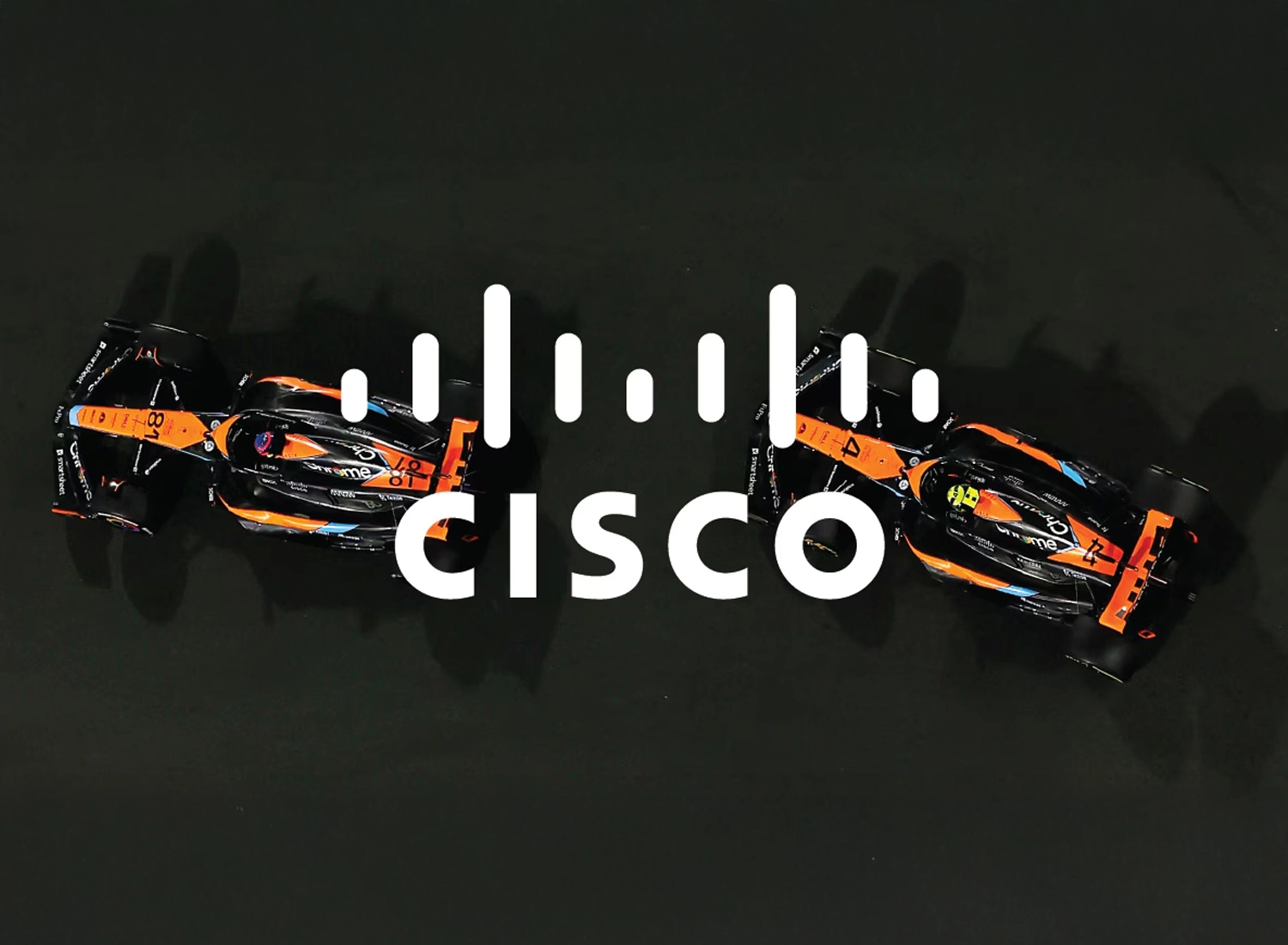
During the São Paulo weekend, a widely shared example highlighted an end-to-end network path of about 223 ms between trackside operations and the UK factory. This matters because McLaren finished 2025 as Constructors’ Champions, and Lando Norris ended the season as Drivers’ Champion.
The headline lesson is simple. Strategy wins when data capture, model output, and delivery to the operator form a unified control loop.
The fundamental constraint is loop time, not model quality
In Formula 1, the value of an insight decays fast. The same is true in enterprise decision systems.
A predictive model can be strong on paper, yet weak in production, if the loop delivers outputs after the decision window closes. In that scenario, teams act on stale inputs, and execution drifts from reality.
A helpful way to frame this is the decision loop:
- Capture signals
- Generate an inference or recommendation
- Deliver it to the operator who holds decision rights
- Execute and observe outcomes
- Feed results back into the next cycle
Tight loops compound an advantage; loose loops leak value.
Pair the latency with the workload.
McLaren’s race operations involve heavy data generation and computing. Public reporting has cited roughly 1.5 TB of data and about 50 million simulations per race weekend.
Cisco has described the connectivity load in similarly concrete terms, citing approximately 2.3 TB of data transferred between track and factory each race weekend, with about 1.5 TB generated at the track and sent over a dedicated connection.
When the workload looks like this, the operating question becomes:
Which part of the loop sets the pace, and how do you keep it stable under pressure?
Observability becomes a performance primitive
Cisco’s ThousandEyes fits into this problem as an early warning layer across the delivery path. Cisco’s own write-up describes how ThousandEyes provides end-to-end visibility across the digital supply chain, helping teams pinpoint issues and resolve them faster.
In practical terms, observability turns a vague complaint like “the system feels slow” into an actionable answer:
• Where the slowdown began
• Which dependency shifted
• Which region, provider, or application path degraded
• Which teams can remediate fastest
That is why “every millisecond counts” is an operational statement, not a slogan.
Steal the operating lesson for your AI program
Most AI programs focus on model selection, prompts, tooling, and pilots. The McLaren analogy pushes you toward a more rigid discipline: enforce loop performance like a product requirement.
Pick one decision where timing changes the outcome:
• Pricing updates
• Fraud checks
• Routing and dispatch
• Credit risk approvals
• Customer retention offers
• Supply planning reallocations
Then implement four controls.
1. Define the latency threshold that leadership will enforce
Set a measurable target for end-to-end time, from signal arrival to operator action.
2. Assign a single owner across the entire loop
One accountable leader across data capture, model scoring, decision rights, and delivery. Cross-functional work remains essential, yet accountability remains singular.
3. Instrument the full delivery path
Use ThousandEyes or an equivalent capability to monitor the network and application path that carries the decision output to the operator.
4. Design for degradation modes
Could you define what happens when the loop slows? Examples include fallback policies, default thresholds, safe hold states, and escalation rules.
Where delay enters first in most companies
When leaders audit loop time, delays usually appear in four places:
• Data quality: late feeds, missing fields, weak lineage, slow joins
• Evaluation confidence: unclear thresholds, inconsistent offline to online parity
• Decision rights: approvals, handoffs, meetings, ambiguity on who can act
• Delivery execution: dashboards nobody watches, alerts that arrive late, tools that fail under load
If you want one diagnostic question to end the debate, use this:
Where does time get lost first, from signal to action, in the path your operators actually use?