

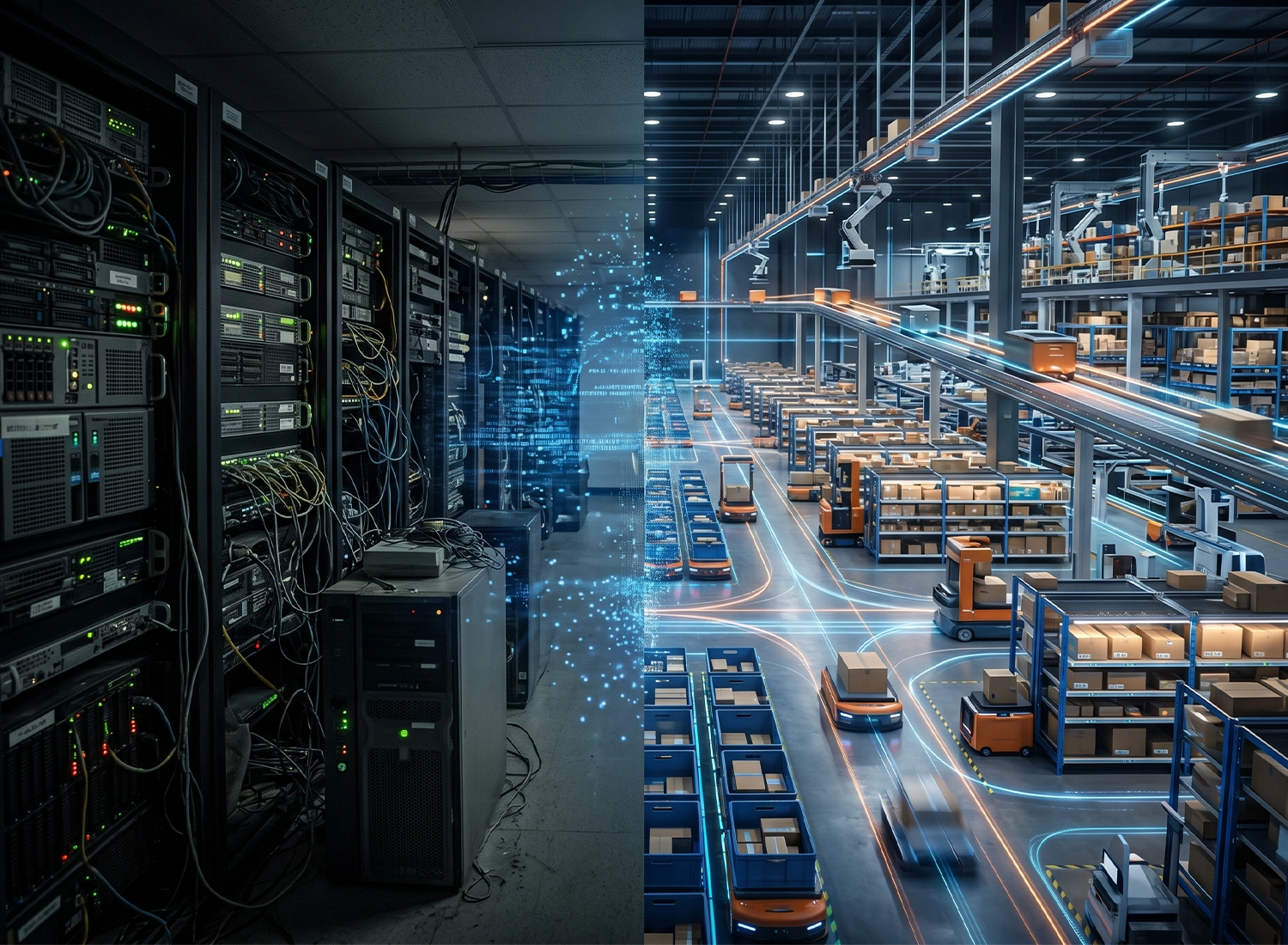
The retail searches I am running in 2026 look materially different from where they were two years ago, and the reason is visible in how the companies themselves are splitting.
One group is still treating AI as a layer added onto existing workflows: recommendation engines, chatbot pilots, marketing automation, and internal productivity tooling. The second is restructuring how the business itself operates around AI capability.
That distinction is now reshaping retail leadership hiring in ways that are increasingly hard to miss. Many retail boards are still evaluating CIO and CTO candidates using frameworks built around ERP modernization, governance, and enterprise transformation. The strongest operators in the current market are increasingly being hired for something very different: deploying AI systems into live retail environments and being held accountable for what happens to operating performance afterward.
Boards that have recognized this distinction are pulling ahead. The ones still running traditional technology leadership searches are finding out about the gap after the fact, usually when a competitor's margin structure or fulfillment speed no longer makes sense on paper.
The same pattern is emerging across sectors where AI has moved into live operations. Companies that hire AI-native builders, people with production deployment histories and real accountability for operational outcomes, compound their advantage faster than organizations can close through traditional transformation hiring processes. Amazon's decision to bring Andrew Ng onto its board of directors was a visible version of that logic at the governance level. The board needed someone who understood what AI-native operations actually require.
Retail boards are facing the same decision at the executive level right now.
What Operational AI-Native Retail Actually Looks Like
The clearest signal that a retailer has crossed from AI experimentation into AI-native operations is when outcomes appear in operating metrics rather than innovation pipelines.
Walmart has deployed AI across its supply chain and store operations, connecting those systems directly to operating results on earnings calls. By 2025, Walmart had rolled out AI-powered tools to 1.5 million associates and was moving freight to roughly 60% of stores through automated distribution centers. CFO John David Rainey told investors directly that automation efforts had improved the company's ability to move merchandise to stores and consumers efficiently.
Kroger built a predictive analytics infrastructure that now influences pricing decisions and store operations across the network. During its fiscal Q2 2025 earnings call, the company cited AI as producing more competitive pricing, shrink improvements, and faster fulfillment, and its internal AI platform Sage had reached over 150,000 active associates with more than 95 use cases in production. Sephora deployed a personalization infrastructure that changed how product recommendations and loyalty economics work across both digital and physical channels.
The pattern is consistent across all of them. AI stops operating as a standalone initiative and becomes embedded in daily retail operations. Once that happens, boards start prioritizing leaders who can deploy AI into operations and own the operating results afterward.
Most retail organizations are hiring for the first version of that question and calling it AI-native. Boards confusing AI-curious or AI-fluent executives with AI-native builders are discovering the difference in operating results, typically 12 to 18 months after the hire.
Personalization Agents: The Mandate Creating a New CRO Profile
Personalization has moved well past static recommendation engines in the retailers building serious AI infrastructure.
The current generation of personalization systems operates more like agents than algorithms. They continuously adjust promotions, product ranking, and customer communication based on behavioral signals moving across channels in real time. That kind of agentic system affects customer acquisition economics, repeat purchase rates, loyalty margin, and promotional efficiency at the same time.
That scope has started changing what boards expect from Chief Revenue Officers in retail. The strongest AI-native CRO searches Christian & Timbers has run in retail over the past year have not centered on candidates with traditional sales or commercial backgrounds alone. They have focused on executives who understand how personalization infrastructure actually works at the system level and who can be accountable for the commercial outcomes it produces. This is a meaningfully different mandate than what the CRO role looked like five years ago, and most candidates being surfaced through conventional retail search processes do not meet it.
Best Buy has built personalization infrastructure that connects product recommendations, service upsells, and loyalty incentives across digital and in-store touchpoints, with AI-driven home screens serving personalized experiences to loyalty members across more than 100 million app sessions in a single quarter.
Victoria's Secret deployed AI-native personalization across its email and loyalty infrastructure through Movable Ink's Da Vinci platform, moving from broad segmentation to individual-level offer sequencing that produced measurable lifts in click-through, conversion, and revenue.
When personalization becomes an agentic system affecting revenue at that level of complexity, the CRO mandate looks very different from what it did five years ago.
Store Operations Automation and the Evolving COO Search
Store operations automation is producing some of the most specific and measurable AI outcomes in retail, and it is changing what boards expect from operations leadership as well.
Computer vision systems are now managing shelf-out-of-stock detection, shrink monitoring, and planogram compliance across large store networks in ways that were economically impractical two years ago. Autonomous mobile robots are handling inventory counting, price verification, and in some formats, freight movement inside live retail environments. Labor scheduling systems driven by real-time demand signals are reducing both overtime costs and understaffing simultaneously.
Dollar General has adopted AI-driven ordering systems in thousands of stores to improve in-stock accuracy, while Schnucks Markets deployed autonomous shelf-monitoring robots across its Midwest store base and reported measurable improvements in in-stock rates within the first year.
The COO searches following these deployments look different from traditional retail operations leadership searches. Boards want executives who have managed operations inside environments where AI systems are part of the daily operating model, not executives who will oversee a future transformation toward that state. An executive who has governed AI initiatives is not the same as one who has run operations where agentic systems affected store-level outcomes in real time. Boards that treat those profiles as equivalent are making the same mistake in COO searches that many made in CIO searches years ago.
Named Hires and What They Signal
Several public retail AI leadership appointments and mandate changes are worth examining because of what they reveal about where boards are setting the bar.
Target promoted Prat Vemana from Chief Digital and Product Officer to Chief Information and Product Officer, consolidating ownership of cybersecurity, data platforms, data science, infrastructure, product engineering, and AI under a single executive accountable for technology-driven operating performance. The expanded mandate reflects how Target has moved AI out of a standalone function and into the core technology leadership structure.
Albertsons created an EVP and Chief Data and Analytics Officer role and filled it with Gautam Kotwal, who came from Kohl's, where he built its enterprise data and machine learning infrastructure. The mandate was explicitly tied to personalization, omnichannel intelligence, and operating performance rather than sitting inside a traditional IT function.
Gap Inc. appointed Sven Gerjets as CTO with a mandate to build AI infrastructure across its brand portfolio and establish a dedicated Office of AI. In 2025, Gerjets signed a multiyear partnership with Google Cloud to accelerate that infrastructure, describing the effort publicly as building Gap's entire future technology roadmap around AI.
The common thread across these appointments is that boards selected executives with real system-building and deployment histories. In my experience running these searches, the moment a committee stops asking "does this candidate understand AI" and starts asking "what have they actually deployed and what happened afterward" is when the search starts finding the right people.
What is also worth noting is where boards are not finding these executives. Most of the strongest AI-native retail operators are not surfacing through traditional retail technology networks because they have not been building careers inside traditional retail technology organizations. They have been building and deploying AI systems inside applied AI product companies, logistics technology environments, and forward-deployed engineering teams at AI-native organizations, where production accountability for system performance existed long before AI became a retail board-level topic.
Why the Comp Market Has Already Moved
The compensation structures attached to retail AI-native CIO and CTO searches have moved faster than most internal HR benchmarks reflect.
An AI-native CTO or CIO at a public retailer with 5,000 to 10,000 employees is now seeing total compensation structures that look materially different from what traditional retail technology executive surveys show. Base salary, bonus, and annualized equity for these roles now reflect the operating leverage boards believe the right leader can generate, not the infrastructure management scope that defined the role in a previous generation.
The same dynamic applies to roles that did not exist in retail executive surveys two years ago. Forward Deployed Engineers now operate between AI vendors and live retail environments. Applied AI Engineers increasingly own production deployment rather than prototyping. These profiles have become central to how advanced retailers build AI-native operating teams, and they command compensation premiums that traditional retail HR benchmarks still do not reflect.
We are seeing the same pressure inside PE-backed retail portfolios where operating improvement timelines are shorter and AI deployment is increasingly tied directly to margin expansion expectations. In those environments, boards and operating partners are placing much greater weight on production deployment history than traditional transformation credentials.
In the searches I run inside PE-backed retail portfolios specifically, the gap between what internal HR benchmarks show and what the market actually requires has become one of the most common reasons strong candidates disengage late in the process. We close that gap by knowing where these operators work and how to evaluate whether the deployment history they describe reflects genuine system ownership.
The Christian & Timbers 2026 Corporate AI Compensation Study documents what that gap looks like across retail company sizes, including how performance-linked bonus design is evolving for leaders whose mandates connect directly to AI deployment outcomes rather than technology oversight. Organizations benchmarking these searches against legacy retail CIO surveys are losing candidates late in the process because the offer does not reflect where the market actually is.
What Retail Boards Now Expect From AI-Native CIO and CTO Searches
The language inside active retail AI leadership searches has shifted in ways that are worth naming specifically.
A year ago, most retail AI CTO and CIO searches still centered on cloud migration, omnichannel architecture, cybersecurity governance, and ERP modernization. Those capabilities still matter. They no longer define the leadership requirement on their own.
Boards increasingly prioritize candidates with direct deployment experience inside live retail operations. Search discussions move quickly beyond conceptual AI knowledge and toward operational impact under real production conditions. Committees want to understand what changed once systems entered production: whether fulfillment stabilized, inventory accuracy improved, or customer acquisition costs shifted materially. They also evaluate whether the candidate can operate comfortably in board and CFO discussions where AI investment is tied directly to EBITDA expectations and financial accountability.
Many traditional retail CIO profiles were built inside technology organizations optimized for governance, vendor management, and infrastructure oversight. Retail AI transformation is producing a different operating environment, one where deployment speed, continuous model iteration, and live operational performance data affect margin in real time. Leaders who have only governed AI from a distance often struggle to operate at that level. Boards that treat those profiles as equivalent are setting up the search to fail before it starts.
This is the gap most search firms are not equipped to close. Firms still framing retail technology leadership around governance, change management, and omnichannel readiness are bringing boards candidates who are AI-curious or AI-fluent. That is not the same as AI-native. The distinction is measurable in outcomes. Christian & Timbers has run more than 200 AI-native executive searches across sectors. In retail specifically, we know where these operators are, what their deployment histories look like, and how to evaluate whether the outcomes they cite reflect genuine system ownership or adjacent proximity to someone else's work.
What Retail Boards Need to Understand Before Running an AI-Native Search
- What is the difference between an AI-fluent retail executive and an AI-native one?
Retail boards increasingly distinguish between executives who have supervised AI initiatives and those who have operated production systems directly. The gap usually surfaces after deployment, when operating performance either improves measurably or does not. In retail, boards often recognize it 12 to 18 months after the hire, once operational results begin showing up in earnings discussions.
- How should a retail board evaluate whether a CTO or CIO candidate has real AI deployment experience?
Ask the candidate to explain what they deployed, what operational problem it solved, and what changed afterward. Strong AI-native operators can describe rollout problems, production constraints, and how performance evolved once the system was live. Candidates without direct ownership usually stay at the level of strategy language and broad outcomes. Boards should also probe whether the candidate has worked alongside Forward Deployed Engineers or Applied AI Engineers, since retailers building serious AI infrastructure increasingly organize around those roles.
- Why are retail boards losing candidates late in the search process?
Compensation is usually the reason. The market for AI-native retail leadership has moved faster than most internal HR benchmarks reflect. Candidates with real production deployment experience often enter searches already aware of competing market offers, while many boards still structure compensation around legacy retail CIO benchmarks. The gap between those two markets continues to widen.
- What should retail boards expect AI-native leadership to actually produce in the first twelve months?
The first year should produce production-ready infrastructure, clear deployment priorities, and measurable results from at least one live system. In many retailers, foundational data infrastructure still requires rebuilding before agentic systems can scale effectively. Boards should focus less on immediate transformation claims and more on whether the candidate has completed this kind of operational transition before.
- How is a retail AI CTO different from a traditional retail CIO?
A traditional retail CIO typically focused on enterprise systems, infrastructure oversight, and long modernization cycles. A retail AI CTO operates much closer to live operational performance. The role increasingly includes responsibility for AI deployment across fulfillment, pricing, personalization, and operational automation, with direct accountability for how those systems affect margin performance over time.
What Separates the Retailers Moving Fast from the Ones Catching Up
The retailers pulling ahead are not the ones running the most AI initiatives. They are the ones where AI already affects how the business operates day to day.
Retailers deploying AI successfully are compressing operational feedback loops across inventory, fulfillment, pricing, and customer retention simultaneously. Once those systems begin improving continuously through production data, the operating advantage compounds much faster than traditional retail optimization cycles allowed. Every quarter of production data those systems accumulate is a quarter of advantage that organizations still in pilot mode cannot buy back.
The fastest-moving companies are not hiring AI-curious executives and calling the role AI-native. Interview processes are being redesigned to surface production deployment history, and compensation is being set at market rates.
The questions boards are asking have shifted. Less focus on whether a candidate can articulate an AI strategy, more on what they have actually deployed, at what scale, and what happened to operating performance once those systems went live.
Many retail boards are still running searches designed for a technology market that has already changed. The distance between those searches and where the strongest operators actually work will define which retailers emerge from the next two years with a structural operating advantage, and which ones spend that time trying to close a gap that keeps widening.